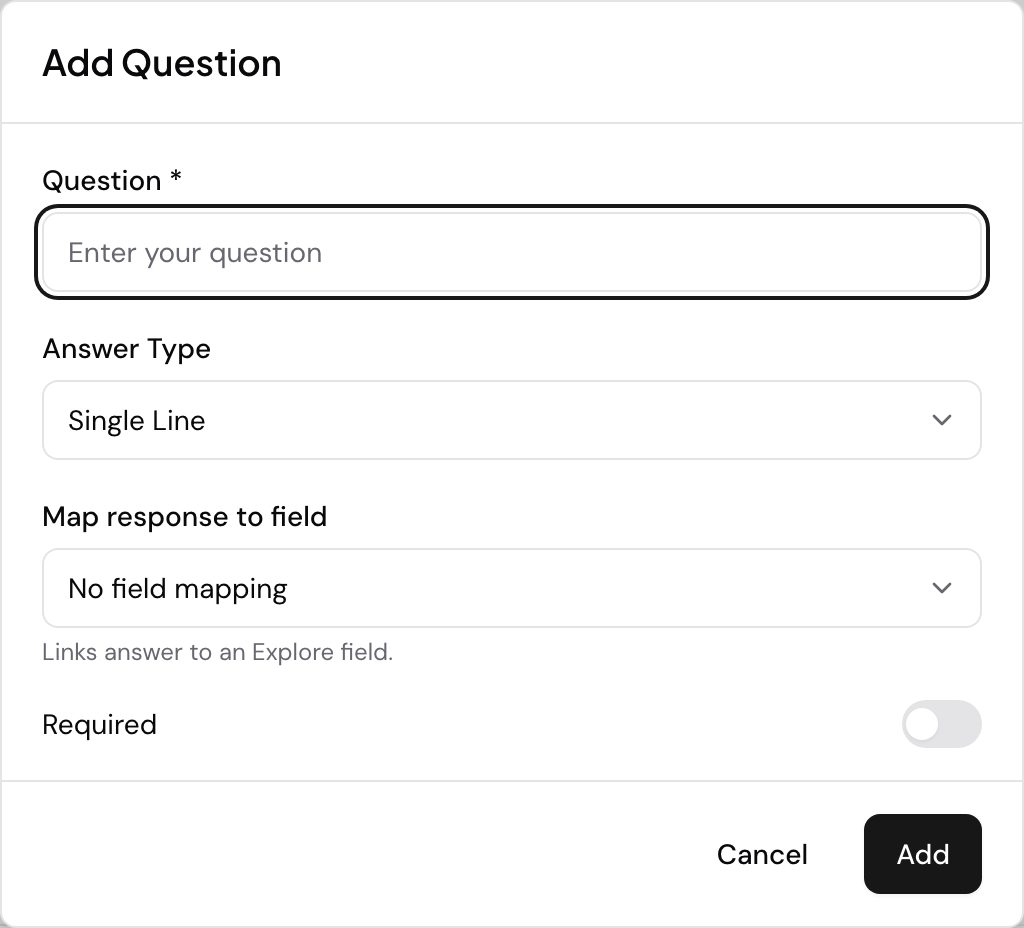
 Map a recorder question to a Speak AI field and every answer lands as structured data next to the recording. You can then filter, sort and export responses instead of opening each submission one at a time.
Map a question to a field
- Open the recorder and go to the Questions tab.
- Add a new question, or open an existing one.
- Find the Map to field control.
- Select the field you want the answer saved to. If the field does not exist yet, create it first, then select it.
- Save the question.
Name the question and the field around the same subject so the pairing stays obvious months later. When a recording arrives, Speak links the answers to the media file for you.
Sync answers collected before the mapping
Mapping applies from the moment you save it, so answers collected earlier stay where they are. To bring them across, open the question settings, select the sync icon beside the field name, and confirm Sync in the Sync Answers to Field dialog. Speak then writes every past answer to the field you selected.
Review the answers in your library
Open the folder your recorder saves to, select Manage columns, and add your fields under Add Columns. Each recording then shows its answers in the list, so you can read every response at a glance and export them together.
If an answer does not reach the field
- Check that the question is mapped. Mapping is set per question, so a question you add later starts unmapped.
- Check when the answer arrived. If it came in before you set the mapping, run Sync Answers to Field on that question.
- Match the answer type to the field. A free-text answer written into a date field can come back empty. See Questions for the answer types you can choose.
- Give every field a distinct name. Two fields with the same name make it hard to tell where an answer went.
- Use Dropdown, Radio Button or Checkbox answers wherever the values are known in advance. Standard values keep the field clean and make filtering reliable.
- Remember that an optional question can be skipped, so an empty field sometimes just means the respondent left it blank.
For what a field can do once it holds data, see AI fields.
Want a hand setting this up? Book a free consult and we’ll do it together on your account.
Related: Embeddable recorder · Browser support